4 minute read
Key benefits


Scott Arnot, Product Marketing Manager Published 7th Mar, 2025 Updated 18th Sep, 2026
A GUIDE TO HYDROSTATIC HEAD RATINGS
WHAT IS A HYDROSTATIC HEAD RATING?
A hydrostatic head rating is a measure of how waterproof a certain fabric is; this indicates the amount of pressure the material can withstand before it starts to leak through.
This test is measured in millimetres (MM), which refers to the height of a column of water that the fabric can resist. Fabrics that have higher ratings are suited for extreme weather conditions, while the lower ratings are more suited for calmer conditions.

HOW IS THIS TEST CONDUCTED?
TEST PREPARATION
A section of the jacket’s fabric is taken and placed onto the hydrostatic pressure machine with the fabric properly secured to prevent any leaks.
APPLICATION OF WATER PRESSURE
Water is then applied to the face side of the fabric at a controlled rate using a pressurised chamber that applies force in millimetres of the water column. The pressure of water is then increased gradually until water seeps through the fabric.
MEASURING WATER PENETRATION
The test continues until three drops of water appear on the underside of the fabric, at this point, the pressure is recorded as the hydrostatic head rating.
EXAMPLE: If water starts seeping through at 10,000mm, the fabric will then be rated at 10,000mm waterproof.
INDUSTRY STANDARDS
In the UK, waterproof workwear must comply with the BS EN 343 standard, which ensures the safety of workers exposed to rain by addressing both water penetration resistance and breathability.
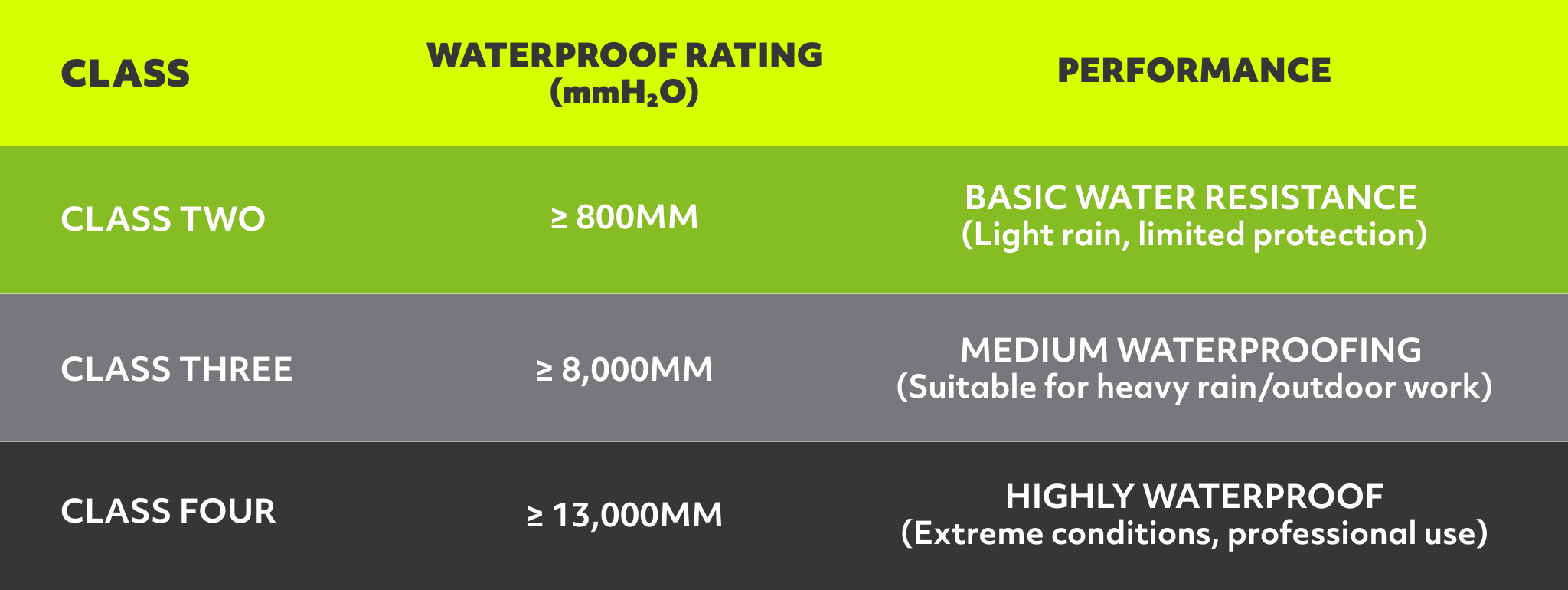
WHAT ARE THE BENEFITS OF HYDROSTATIC HEAD RATINGS?
- Weather protection: Higher hydrostatic head ratings offer better resistance against challenging weather, to ensure you are kept dry and warm whilst working.
- Comfort and performance: When working in rainy conditions, it is important to be in clothing that provides comfort and keeps you dry. Jackets with higher head ratings provide this for you; they prevent discomfort, stop you from feeling the colder weather, and ultimately prevent hypothermia.
- Breathability: The breathability of a jacket is dependent on the membrane/lamination used.
- Increased longevity: High-quality waterproof materials last longer, which reduces the need for frequently replacing jackets.
THE DRAWBACKS
A jacket with a high hydrostatic head rating is useful, but if the seams, zippers, and waterproof coatings aren’t properly designed, water can still seep through.
Materials: There are a lot of lightweight fabrics on the market that produce very high results for waterproof and breathability. The waterproofness comes from the type of membrane/lamination used on the reverse of the fabric as well as the DWR (Durable Water Repellence) applied on the face of the fabric.
Higher cost: Waterproof items with higher ratings tend to be on the expensive side due to the advanced materials and coatings used in the making of the jacket.
WHAT IS THE RECOMMENDED HEAD RATING?
When it comes to choosing the right rain jacket or waterproof trousers there are many different factors to consider.
If you are looking for a heavy-duty HI-VIS garment which has minimal chance of rain seeping through and is suitable for extreme weather conditions, you need to look at a garment with a rating of between 10,000mm – 15,000m with taping applied to the seams.
If a lightweight, breathable garment that keeps you dry in rainy conditions is required, you would be looking at a rating of 5,000mm – 10,000mm, and this is where ROKWEAR® comes in.
ROKWEAR® offers a range HI-VIS jackets and trousers that have hydrostatic ratings from 5500mm to 6000mm, as well as strong EN388 ratings.
The Milford, Selborne, Witley and Blackmoor are excellent companions when dealing with heavy rain and general outdoor work.
Want to view our full range?
Dive into our catalogue!
Written by Scott Arnot
Scott Arnot is Product Marketing Manager at SMI, where he helps businesses find the right solutions to improve safety, compliance, and productivity. Responsible for promoting SMI's extensive range of workplace products and services, he works closely with suppliers and internal teams to ensure customers can access the products, expertise, and support they need to overcome everyday workplace challenges.
Stay up to date with SMI
-

WASTE EXEMPTION REFORM: WHAT BUSINESSES NEED TO KNOW
Understand waste exemption reform, including new charges, changing exemptions, digital tracking, and what businesses need to do now.
-

How to Prevent Accidents in Logistics Loading Bays
Discover how to prevent accidents in logistics loading bays. From critical risk areas to HSE best practices for loading and unloading.
-

DIGITAL WASTE TRACKING: WHAT YOU NEED TO KNOW
Discover all you need to know about digital waste tracking – including how it works, your responsibilities, and how businesses can prepare.
Latest Insights
Read the latest industry insights, top tips, and SMI news.


